← Back to the test bench

Test protocol 02 · Garage door

Can one urgent call become a clean, paid work order?

The benchmark covers emergency intake, qualified-technician dispatch, door and opener history, estimate options, truck stock, signatures, payment, and a return visit.

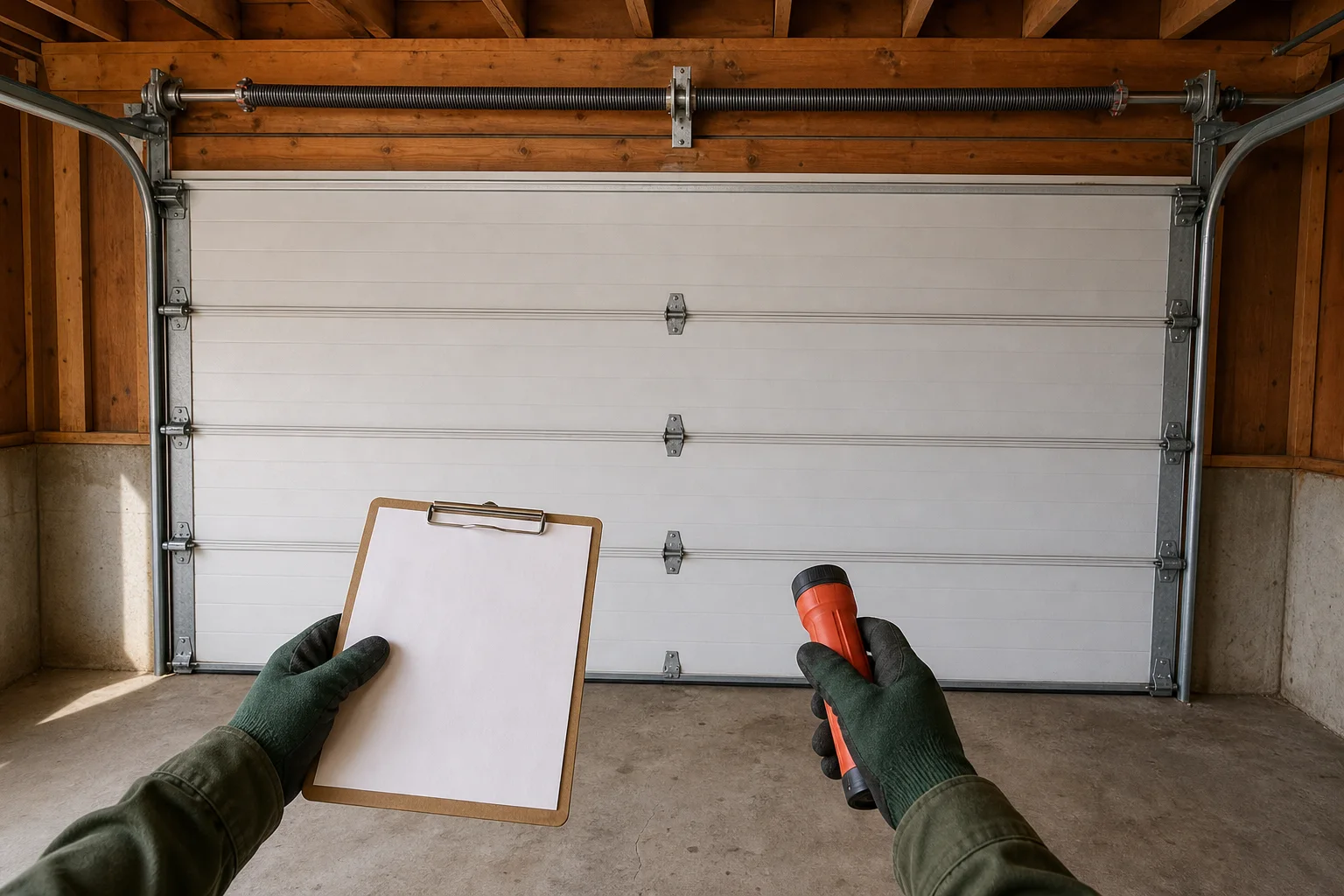
Garage-door technician inspecting a residential torsion-spring assembly
Illustrative field context

Canonical scenario

The broken-spring benchmark

  1. A 7:00 a.m. broken-spring emergency and one scheduled opener replacement
  2. Two technicians with different skills and availability
  3. Three truck-stock SKUs consumed during the job
  4. One commercial property with six individually tracked doors

Evidence captured

What earns a claim

Dispatch
Intake-to-assignment time, taps, notices, and skill matching.
Estimate
Options, revisions, customer approval, and invoice reconciliation.
Asset history
Native door records versus custom fields or unsupported workarounds.
Inventory
Truck-stock consumption, low-stock reporting, and export detail.

Buyer-run companion

Take the protocol into a software trial.

Record 12 handoffs for one call. The full protocol also covers asset history, skill matching, and scheduled work.

Open the trial packet

Publication queue

Evidence first. Article second.

Each item remains queued until its synthetic job, source packet, and deterministic checks pass.

  1. 01

    Emergency call-to-payment benchmark

    QUEUED
  2. 02

    Asset-history and truck-stock test

    QUEUED
  3. 03

    Urgent versus scheduled work comparison

    QUEUED